

Jump to Section

Kitchen Extract Cleaning B&ES Association TR19 ‘Guide to Good Practice’
Safeflow carry out duct cleaning in line with the rules and regulations set out by the TR19 standard.
In order to comply with the TR19 standard, all ductwork and ventilation must be classified as a level. These levels are low, medium or high which are used to signify the purpose and function of that part of the property.
Here is the recommended cleaning cycles for kitchen extraction systems:
| Level of grease production | Example | Up to 6 hours | 6-12 hours | 12-16 hours | 16+ hours |
| Low | No significant production of grease laden air | 12 months | 12 months | 6 months | 6 months |
| Medium | Moderate production of grease laden air | 12 months | 6 months | 4 months | 3 months |
| High | Heavy production of grease laden air | 6 months | 3 months | 2 months | 2 months |
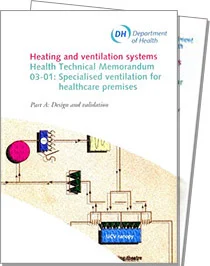
HTM 03-01 Specialised ventilation for healthcare premises
If ventilation systems are not maintained and they do not meet the required standards then there will be an increased health risk for patients. The connection between theatre air quality and surgical site infection has been long established.
Any proven breaches of the requirements can result in prosecution.
To download the departments of health’s guide on 03-01 click the button below.
Legislation & regulations for ductwork cleaning
Almost any public building in the UK will have ductwork in it. It comes in all shapes and sizes and much of it is hidden from view.
This however does not prevent the accumulation of dust, debris and vermin, over a period of time a significant build up can occur.
Breathing in air which flows over this can cause a serious risk to health and wellbeing of all who inhale it.
To counter this major issue various guidelines have been issued to clean ductwork. They can be found in B&ES TR19, BS EN15780
Cleanliness of Ventilation Systems to BSEN 15780
The following is a quick check compliance chart to ensure clients are aware of their responsibilities.
These are the recommended period for inspections:
| LOW | MEDIUM | HIGH | |
| AHU | 24 months | 12 months | 12 months |
| Filters | 12 months | 12 months | 6 months |
| Ductwork | 48 months | 24 months | 12 months |
BS 9999 Fire Damper Maintenance Legislation
Fire dampers are used to stop fire from spreading through ductwork to other areas in a building. When a fire is detected the fire dampers will close and prevent fire spreading.
It is vital that fire dampers work correctly as they play a crucial part in a buildings fire safety system. Fire dampers can help to save lives, which is why it is so important to get them regularly inspected, maintained and tested.
BS 9999 legislation states that all ductwork should be fitted with fire dampers that have been tested when the ductwork is installed. The legislation also states that all fire dampers but be tested by a competent person after they have been installed. The interval between these tests can’t exceed 2 years. Spring-operated fire dampers need to be tested at least every year or more regularly if they are installed in locations that might be affected by high levels of dust or pollution. Fire dampers in hospitals must be tested every year.